
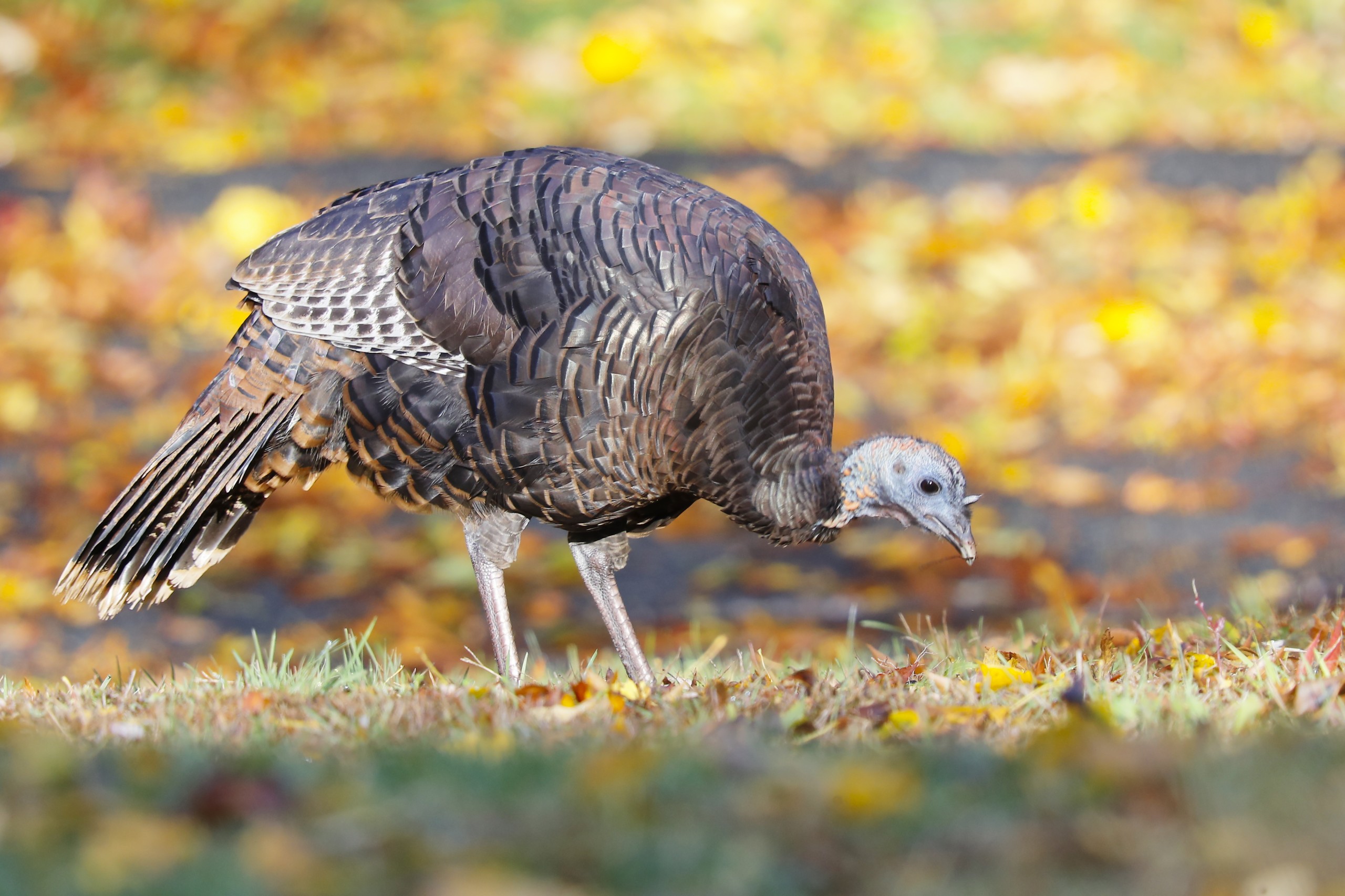
Nov. 28, 2025: Local Wild Turkeys forage intensively for acorns, seeds, fruits, and insects in late fall, moving in flocks through forests and fields, feeding at dawn and late afternoon, and returning to high roosts before dark to conserve energy. This turkey was recently seen on the west side of Green Pond.
Wild Turkeys on Cape Cod in November follow a highly consistent daily foraging rhythm shaped by shorter days, cooler temperatures, and the need to build fat reserves for winter. They roost overnight in mature trees, often pines or large deciduous trees, and at first light glide down to the ground, beginning to forage almost immediately. Early morning feeding is slow and methodical as they work through leaf litter and along woodland edges.
By mid-morning, turkeys are fully engaged in intensive ground foraging. They move through oak woodlands, mixed forest margins, thickets, open meadows, cranberry bog edges, and sometimes yards or agricultural areas. Their priority food source at this time of year is hard mast, especially acorns from white and red oaks. Using both their beaks and their feet, they scratch aside leaves to uncover these high-calorie nuts, which are essential for building winter fat stores. They will also take what remains of soft mast such as beach plums, bayberry, rose hips, or leftover grapes, though these fruits are far less abundant by late fall. On mild November days they opportunistically consume insects such as beetles and grubs, which provide valuable protein but are far less available than during warmer months. Seeds from grasses and meadow plants, as well as spilled grain in fields or around backyard feeders, also contribute to their daily intake.
Throughout the day, turkeys travel in loose flocks that may include hens with their young, or bachelor groups of males. Their movements typically span half a mile to more than two miles per day, depending on food availability. A second, pronounced feeding peak occurs in the late afternoon, often in open, sunlit areas where the ground is slightly warmer and food is easier to access. As dusk approaches, they return to familiar roost sites, selecting tall trees with sturdy horizontal branches that allow for safe ascent and good visibility.
In November, acorn abundance strongly influences their movements; in a heavy mast year, turkeys often remain within a relatively small home range, while early snowfall may temporarily shift foraging to more open areas such as bog edges or roadsides. Flocks are alert and communicative, using soft clucks and purrs to maintain cohesion. With the breeding season still months away, males show little strutting behavior, though mild dominance interactions do occur.
Leave A Comment
You must be logged in to post a comment.