
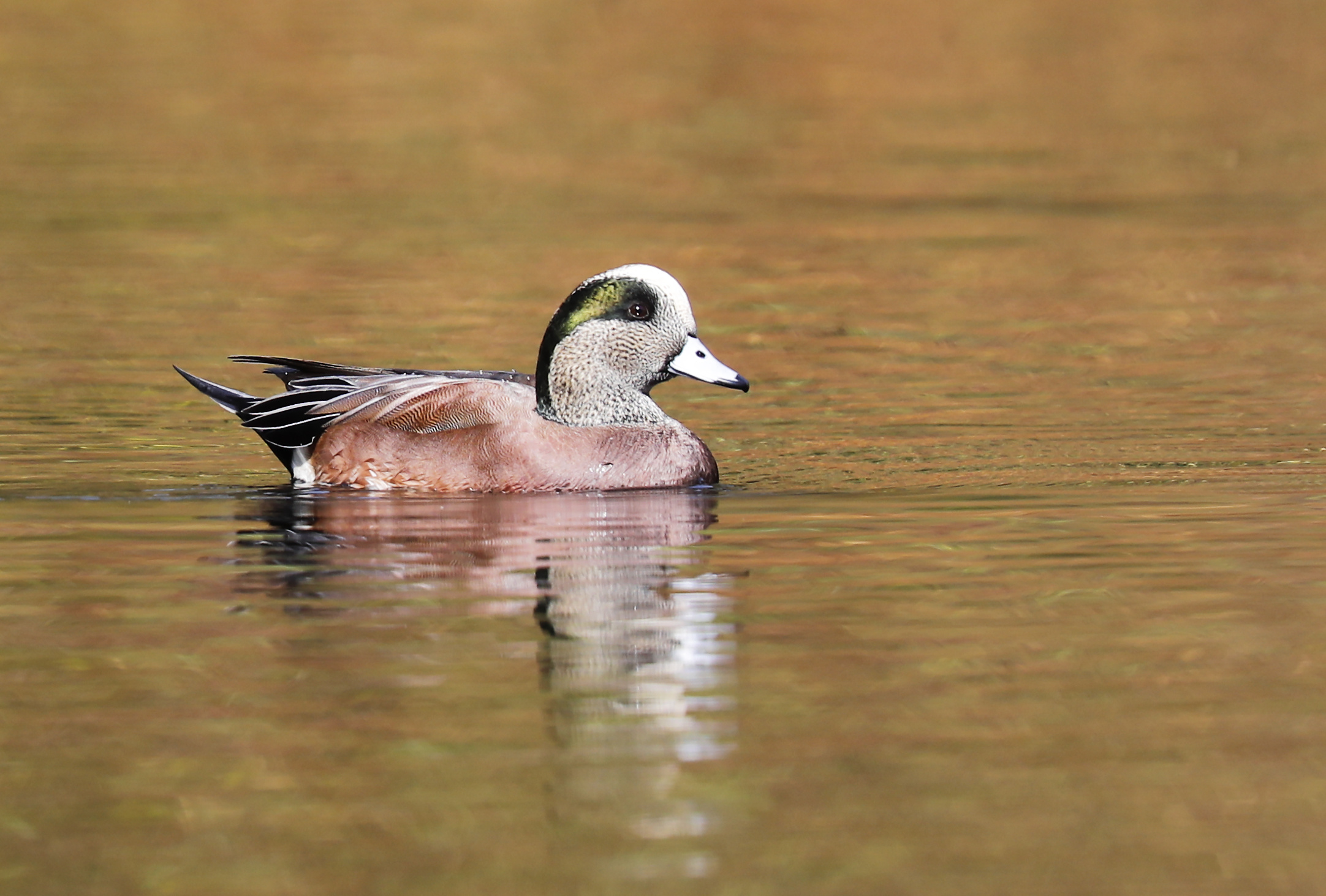
Dec. 5, 2025: American Wigeons migrate to Falmouth in late fall for open water and food, move farther south during colder months, and often return to the same reliable coastal stopover sites each year thanks to strong migratory site fidelity.
Migratory American Wigeons follow a remarkably consistent seasonal rhythm, and Cape Cod plays an important role for many of them during the late fall months.
During late fall, large numbers of wigeons leave their breeding grounds in Alaska, western Canada, and parts of the northern U.S. and begin pushing southeast along major flyways. As shallow wetlands and northern marshes start to freeze, they shift toward coastal estuaries, protected bays, and expansive salt-marsh systems, exactly the kinds of habitats Cape Cod offers in abundance. Places like Waquoit Bay, Great Pond, West Falmouth Harbor, and the quiet backwaters of Pleasant Bay often host scattered groups or compact mixed flocks of dabbling ducks that include wigeon.
As winter deepens, some wigeons remain on Cape Cod if conditions stay mild and food is accessible, mainly submerged vegetation and eelgrass beds, along with waste grain in nearby fields. But when cold snaps freeze freshwater and restrict feeding in the shallows, many continue farther south along the Atlantic coast, heading to Long Island, the Chesapeake, the Carolinas, Georgia marshes, and even Florida’s coastal lagoons. Their migration is flexible and temperature-driven; they move as needed to maintain access to open water and dependable forage.
American Wigeons also show a strong tendency toward site fidelity, both on breeding grounds and along migration routes. Many individuals return to the same stopover sites year after year, especially when those sites provide reliable feeding areas, minimal disturbance, and safe loafing habitat. On Cape Cod, that means you may see wigeons using the same protected ponds, coves, and marsh edges each November, often within the same general areas or even the same coves and tidal flats.
In short, American Wigeons arrive in Falmouth in late fall as part of their seasonal southbound shift, may linger if conditions allow, and often continue farther down the coast during deeper winter. Their repeating use of specific stopover sites is common, making Falmouth’s sheltered wetlands an important annual waypoint for many individuals.


Leave A Comment
You must be logged in to post a comment.